

Uncovering the Score Board COA Forgery Scandal in Wrestling Memorabilia: A Warning from Ken Goldin
In the vibrant world of professional wrestling collectibles, few items hold as much allure as autographed trading cards from the golden era of WWF (now WWE). Icons like "Macho Man" Randy Savage, The Undertaker, and Andre the Giant represent not just athletic prowess but cultural milestones that fans cherish. However, beneath the excitement of hunting rare pieces lies a shadowy underbelly: widespread forgeries that have duped collectors for decades. One particularly insidious issue involves counterfeit Certificates of Authenticity (COAs) from The Score Board, Inc., a now-defunct company once prominent in the sports memorabilia industry. Despite its legitimate roots, Score Board's legacy has been tarnished by forgers exploiting its name to peddle fake autographs—especially in wrestling, where such items are surprisingly common yet poorly understood.
This article aims to shed light on this under-the-radar problem, drawing from recent discussions in the wrestling community, expert statements, and historical context. If you're a collector of vintage WWF cards or signed memorabilia, understanding this could save you from costly mistakes. We'll explore the background of Score Board, key revelations from Ken Goldin, real-world examples of forgeries in wrestling, and tips to protect yourself.
The Rise and Fall of The Score Board, Inc.
The Score Board, Inc. was founded in 1986 by Paul Goldin, with significant involvement from his son, Ken Goldin, who later served as President and CEO. Based in Cherry Hill, New Jersey, the company specialized in producing and distributing autographed sports memorabilia, including trading cards, photos, and equipment. They conducted private signings with athletes across various sports, issuing COAs to guarantee authenticity. These COAs typically featured a simple design: a certificate with the company's logo, a guarantee statement, and a signature from Ken Goldin.
At its peak, Score Board was a legitimate player in the hobby, partnering with major leagues. However, the company filed for bankruptcy in 1998 and ceased operations. During the bankruptcy proceedings, assets were auctioned off, including embossing stamps used for authentication. Unfortunately, forgers acquired these stamps, enabling them to replicate authentic-looking marks on counterfeit items. This created a vacuum that counterfeiters eagerly exploited. Without ongoing oversight, they began reproducing Score Board COAs and stamps to authenticate their fakes. As noted in various collector forums and articles, these replicas were easy to produce—often via simple photocopying or printing—leading to a flood of bogus items on the market.
While Score Board did work with living athletes in controlled signings, certain categories were never part of their portfolio. This brings us to the heart of the wrestling issue.
Ken Goldin's Bombshell: "NONE" Wrestlers Signed for Score Board
In February 2024, a discussion on X (formerly Twitter) brought this forgery problem into sharp focus for wrestling fans. A collector posted images of a suspicious 1987 Topps WWF card purportedly autographed by "Macho Man" Randy Savage, accompanied by a Score Board COA signed by Ken Goldin. Tagging Goldin directly, the user questioned the item's legitimacy.
Goldin's response was unequivocal: "It's called a fake autograph and a counterfeit COA. No wrestlers, NONE, ever signed autographs for scoreboard." This statement, coming from the company's former President and CEO, confirms that Score Board never conducted signings with professional wrestlers. Any wrestling item bearing a Score Board COA is, by definition, fraudulent.

Ken Goldin's X post, verifying NO wrestler(s) ever signed with Score Board.
Goldin further referenced a 2011 article from Autograph Magazine to illustrate the broader pattern of Score Board forgeries. The piece details how counterfeiters targeted memorabilia, forging signatures of legends and pairing them with reproduced Score Board COAs that included unauthorized additions, such as holograms—elements never used on genuine Score Board certificates. [Link to Autograph Magazine article: Click here]. While the article focuses on other sports, the same principles apply to wrestling: any wrestling-related item exhibiting these red flags, such as hologram stickers (which Score Board never used), should be treated with extreme caution. Though no specific wrestling examples with holograms have been reported, if encountered, collectors should be leery and vigilant about what they're purchasing, as it highly likely indicates a forgery just the same.
Discussions on platforms like Reddit, Blowout Cards Forums, and Facebook groups (e.g., Sports Cards Nonsense) echo this, with collectors warning that Score Board COAs are notoriously easy to fake and often rejected by modern authenticators like JSA or Beckett.
Real-World Examples of Wrestling Forgeries
Despite Goldin's clear stance, these counterfeit items continue to circulate in the wrestling community, often on sites like eBay. The focus here is on understanding the "whys" behind spotting fakes rather than just listing specific wrestlers, but known examples include cards purportedly signed by "Macho Man" Randy Savage, Ultimate Warrior, Rick Rude, The Undertaker, and Andre the Giant—all paired with bogus Score Board COAs. Here's a closer look at a few:
1. "Macho Man" Randy Savage 1987 Topps WWF Card: In the X thread, a collector shared photos of a card from the iconic 1987 Topps WWF set, showing Savage in his signature pose with Miss Elizabeth. The autograph appears scrawled across the card, and the accompanying COA from Score Board guarantees its authenticity, complete with Goldin's printed signature. However, as Goldin confirmed, this is a forgery. This same item was listed on eBay as "Ungraded - Excellent" with the Score Board COA, attracting bids and selling for $128.03 plus shipping. The listing included photos of the card and COA, which matches the counterfeit style described by Goldin. Buyers praised the seller's feedback, unaware of the forgery. Similar items have been reported with stamped Goldin logos that damage the card itself, a tactic not aligned with the real company's practices. This example underscores how these fakes can fetch real money—multiplied across dozens of listings, it adds up to significant fraud.
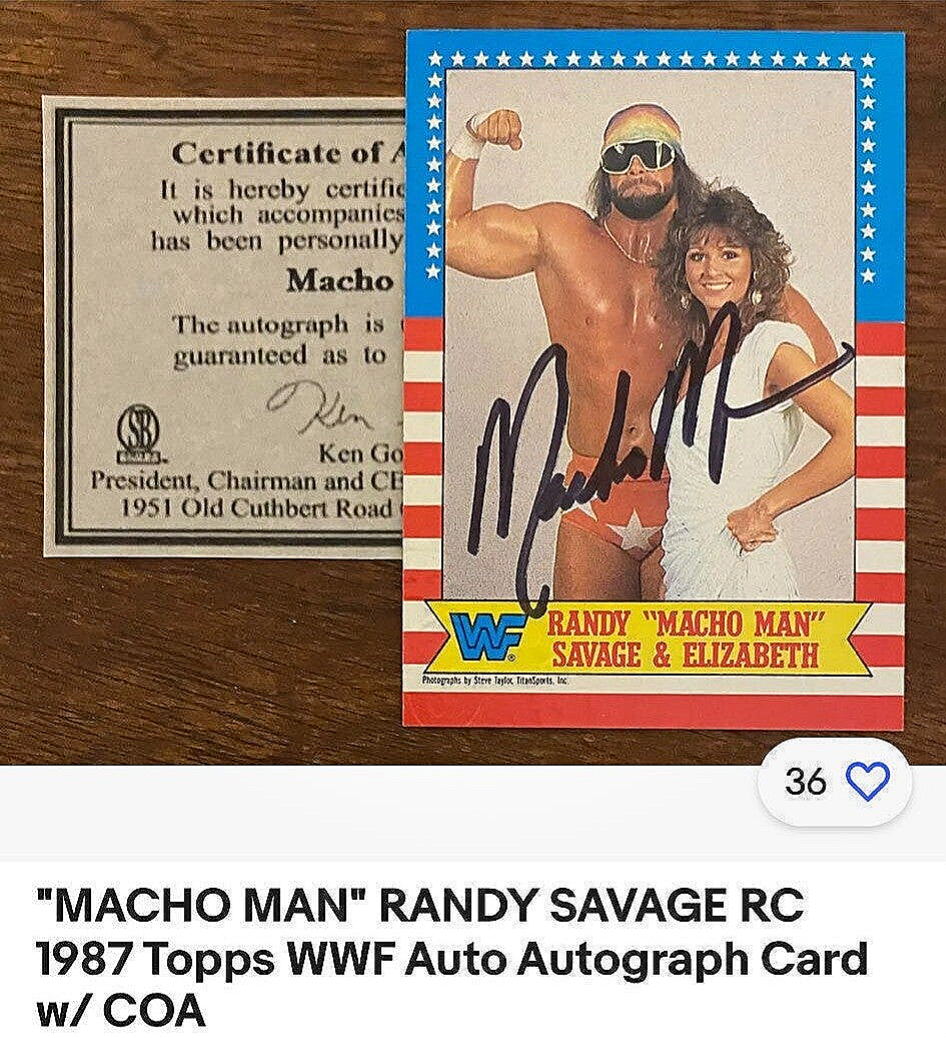
Closer look at the bottom left corner stamp, and a very forged autograph.

The listing unfortunately sold for $128.03 on ebay. Buyer's beware.
2. Ultimate Warrior Card: On January 10, 2026, in a wrestling collectibles discussion, an Ultimate Warrior autographed card with a Score Board COA was shared and praised as potentially the next six-figure collectible. However, given Goldin's confirmation that no wrestlers signed for Score Board, this couldn't be further from the truth—it's highly likely a forgery, highlighting how misinformation spreads even among enthusiasts.
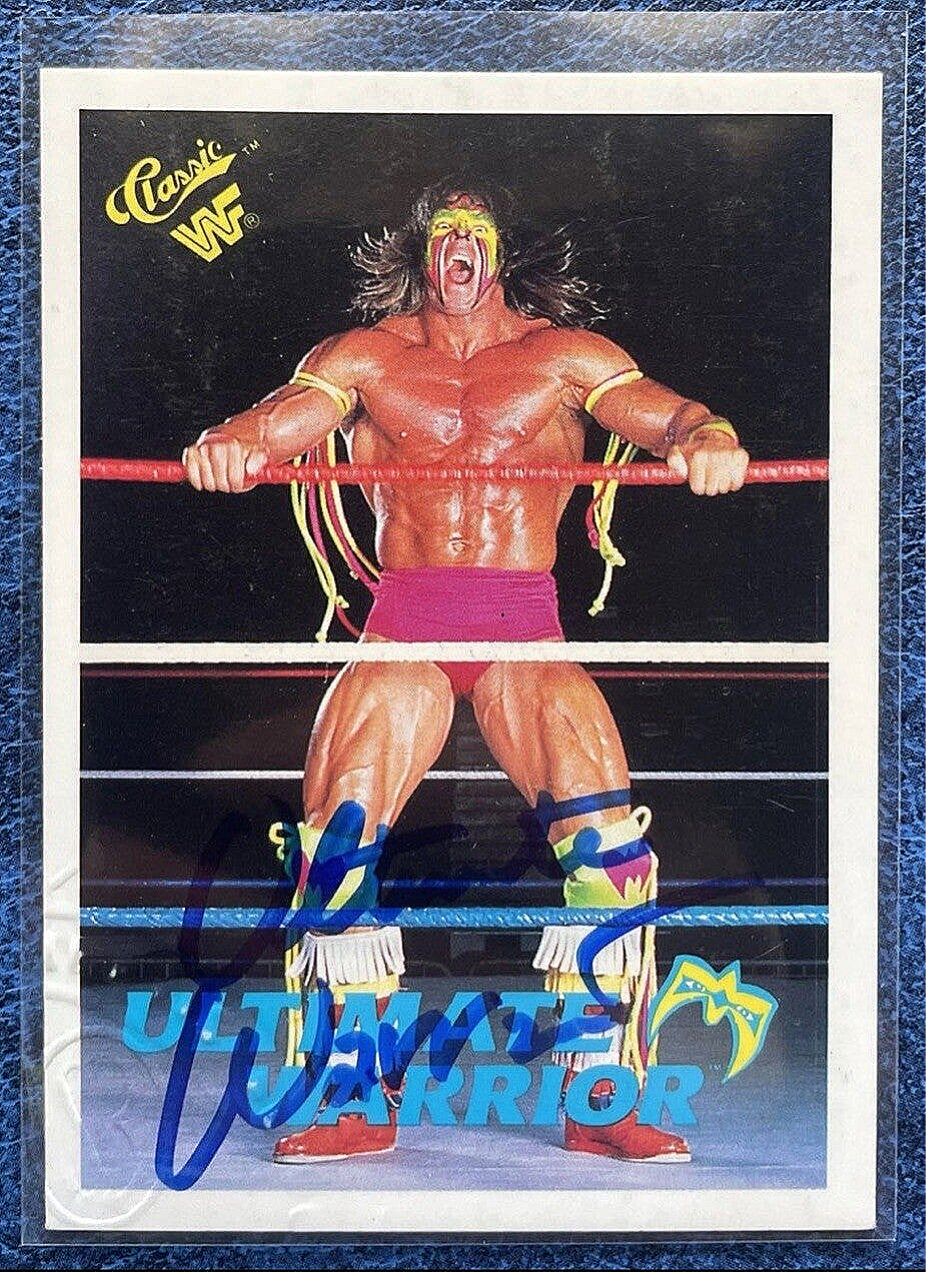
Forged Score Board stamped Ultimate Warrior Autograph card
Other reports mention similar fakes for Rick Rude, The Undertaker, and Andre the Giant. These aren't isolated incidents; searches on collector forums reveal ongoing complaints about WWF stars appearing with dubious Score Board COAs.
How Forgeries Proliferate and How to Spot Them
Forgers thrive on the nostalgia of 1980s and 1990s wrestling memorabilia, where documentation was lax compared to today's standards. After Score Board's demise and the auction of its assets, counterfeiters acquired embossing stamps and printed fake COAs en masse, attaching them to forged signatures on readily available cards. Key red flags include:
- Holograms or Stickers: Genuine Score Board COAs were plain paper documents without holograms. Any with added security features are likely fakes.
- Impossible Signings: Score Board focused on living athletes in private sessions. Wrestlers were never involved, and claims otherwise are false.
- Signature Inconsistencies: Compare the autograph to verified examples. Forged ones often look rushed or mismatched in style (e.g., Savage's bold, flowing script vs. a shaky imitation).
- Stamp Overlaps and Damage: Score Board used embossed stamps on items for authentication. If a signature overlaps the stamped region and remains completely intact without any alteration or damage to the ink, it raises suspicions. Genuine processes might involve stamping before signing, but if done afterward (as forgers might simulate), the embossing clamp could damage the signature where the stamp is placed. This is a potential tell—examine closely for signs of undisturbed ink over embossed areas.
- Lack of Provenance: No chain of custody or third-party verification? Unless you like gambling, walk away.
Modern authenticators like PSA/DNA, JSA, or Beckett often reject Score Board items outright due to the forgery prevalence. As one forum user noted, "Scoreboard was legit, but there are lots of forged/fake autos out there using Scoreboard COAs."
Advice for Wrestling Collectors: Stay Vigilant
The wrestling community—fueled by events like WrestleMania and the rise of AEW—has seen a boom in memorabilia values. A genuine autographed Randy Savage card could fetch hundreds or thousands, making fakes all the more tempting for scammers. To protect yourself:
- Seek Third-Party Authentication: Always opt for items certified by reputable firms. Avoid relying solely on the seller's COA.
- Research Sellers: Check feedback, but dig deeper—high ratings don't guarantee authenticity.
- Join Communities: Forums like Reddit's r/WrestlingCards or Facebook groups are goldmines for spotting fakes.
- Buy from Trusted Sources: Auction houses like Goldin or Heritage, or dealers with strong reputations, are safer bets.
- Report Suspicions: If you spot a fake on eBay or elsewhere, report it to help clean up the market.
Ken Goldin's public clarification (@KenGoldin) is a wake-up call: the hobby's leaders are stepping up to combat fraud. As he emphasized in his X response, transparency is key to preserving trust.
Conclusion: Preserving the Legacy of Wrestling Icons
Wrestling memorabilia isn't just about ownership—it's about honoring legends like Randy Savage, whose "Oh yeah!" echoes through generations. But forgeries erode that joy, turning treasures into traps. Thanks to revelations like Goldin's, the community is better equipped to fight back. If you've encountered a Score Board COA on a wrestling item, assume it's fake until proven otherwise. Share this knowledge, consult experts, and let's keep the squared circle authentic. Forged memorabilia is something we all are responsible for. As its our job to get these items removed and our communities better enriched with the facts on collecting.
Sources: X thread discussion (February 2024 and January 2026), Autograph Magazine article on forgeries (2011), collector forums including Blowout Cards and Reddit, Ken Goldin
Updated: January 11th 2026
Explore more historic wrestling collectibles: